

Lyft: Comms Platform
As Lyft scaled, effective communication between riders and the platform became critical to growth and retention. I led design on the communications platform, defining how messaging surfaces across the rider experience to support key moments like onboarding, trip coordination, and re-engagement. This work established a foundation for delivering timely, contextual communication at scale.
Role
Lead designer on Comms Platform
Scope
Rider experience, and communication system
Building Communication as a Growth System
As Lyft scaled, communication became a critical lever for driving rider activation, trip completion, and retention. The product relied on timely, relevant messaging to guide users through key moments, from onboarding to ride coordination to re-engagement.
However, messaging was fragmented across surfaces and lacked a cohesive system for delivering the right message at the right time.
I led design on the rider communications platform, defining how messaging is orchestrated across the product to support critical information, trip experiences, and lifecycle engagement.
I reframed communication from a set of disconnected notifications into a system-level engagement lever, focusing on:
• delivering messages at the right moment
• ensuring consistency across surfaces
• aligning messaging with user intent and lifecycle stage
My Role
Lyft already had strong user demand and frequent engagement through rides, but there was an opportunity to better guide users through key moments in the lifecycle.
Communication could increase onboarding completion, reduce trip friction, improve reliability perception, and re-engage dormant users.
The challenge was designing a system that could operate across all of these contexts without overwhelming the user.
The Opportunity
Fragmented Surfaces
Messaging existed across push notifications, SMS, in-app banners, and email, often without coordination, and often built as one-offs.
System Complexity
Designing for multiple surfaces, states, and triggers required a unified system rather than one-off solutions
Timing & Relevance
Messages needed to arrive at the exact right moment to be helpful, not intrusive
User Trust
Over-communication or poorly timed messaging risked degrading trust in the product
Core Design Challenges
The System
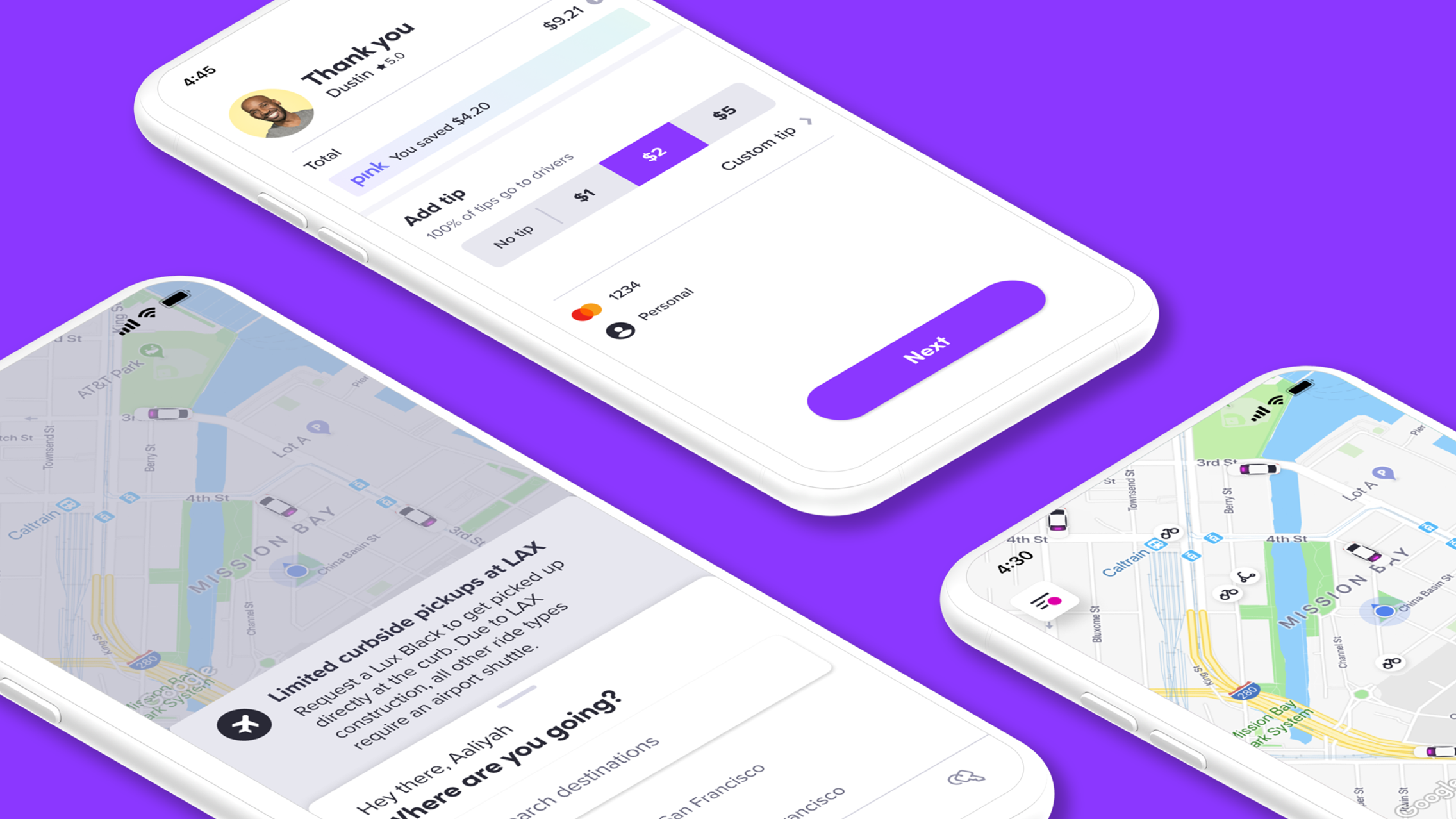
We defined a system for how messaging should operate across Lyft:
Trigger-based communication
Messages are tied to user actions or lifecycle states, for example, a discount of their next ride or pickup instructions.
Priority and orchestration
Not all messages are equal. The system determines what gets sent, when, and where. “Blocking” messages that help a user successfully request a ride, for example an expired credit card, are highest prized.
Contextual delivery
The same message adapts across push, in-app, and other surfaces.
A Unified Communications Framework
The system supports key rider messages and moments:
Onboarding
Helping new users complete setup and take their first ride.
Pre-trip and trip coordination
Driver matching, arrival timing, and trip updates.
Post-trip and re-engagement
Receipts, feedback, and bringing users back.
Critical Information
Expiring credit card, airport pickup instructions, city or state ordinances
Promotional
Ride credit, discounts, upsells
Lifecycle Coverage
The Rider Communication Platform became a core lever for growth, clarity, and operational efficiency across Lyft.
Success:
24% increase in Lux rides at airports
14% increase in Lyft Pink membership
Reduced client development time through shared, scalable components
Incremental rides driven through Rider Milestone banners
Beyond metrics, the platform aligned teams around a shared communication contract with riders, reduced duplication across the org, and established a durable foundation for future growth and experimentation.